
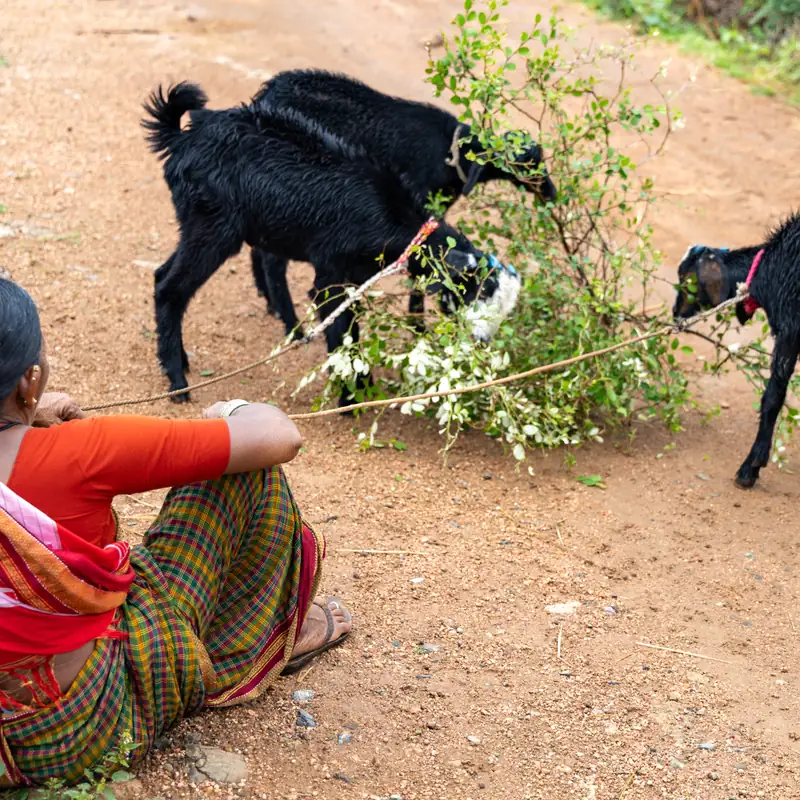
Goat rearing training for women
A practical programme for women who rear goats as a livelihood. The content below follows the training material used in the field and is written for easy use at home and in the shed.
Why goat rearing matters
- Goats are reared using scientific methods.
- Income comes from milk, urine, dung, meat and kids.
- It is a supplementary business that can start in a small space with relatively low capital.
- It gives women an opportunity for self-employment.
- It increases family income.
- It creates employment in rural areas.
Shelter management
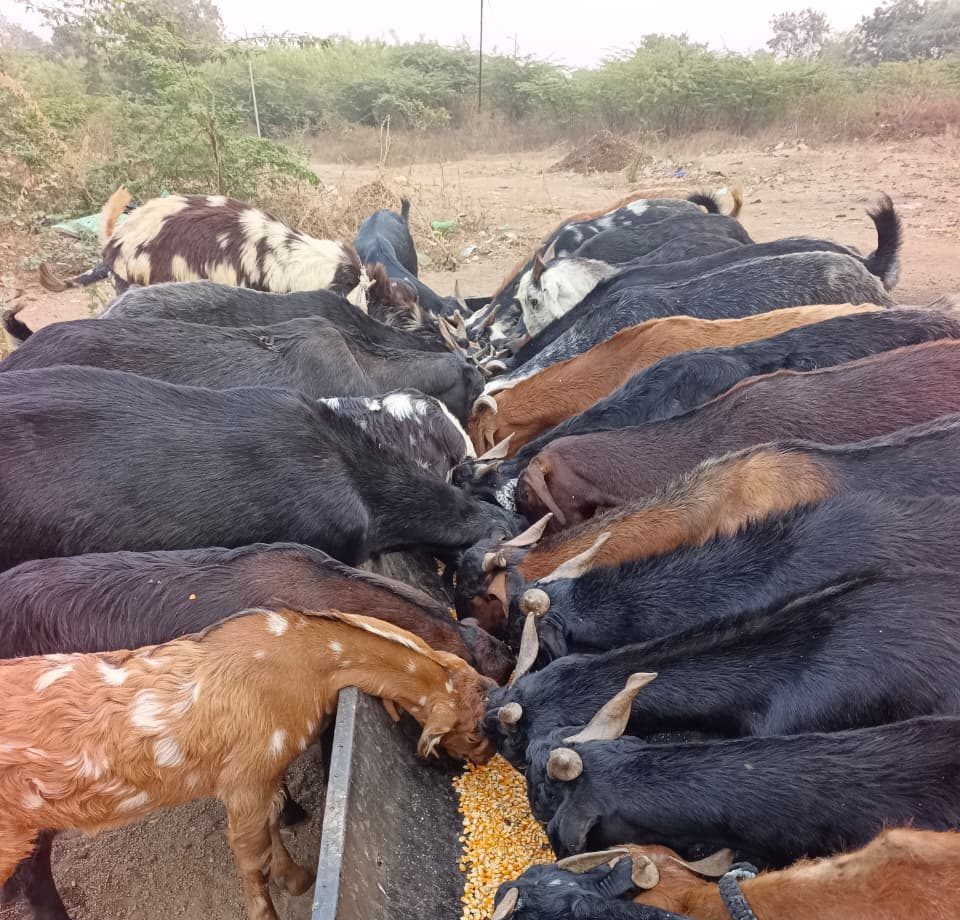
- The shed should be clean, dry, level and airy.
- Make sure rainwater does not collect inside the shed.
- Give goats enough space.
- Clean the shed regularly.
Feed and water
- Give green fodder, dry fodder and, as needed, balanced feed.
- Keep clean drinking water available all the time.
- Give pregnant does and kids special feed.
- Give mineral mixture and salt on veterinary advice.
Health management
- Vaccinate on time.
- Give deworming medicine on veterinary advice.
- Keep a sick goat apart from the others.
- Get regular health check-ups done.
Breeding and kid care
- Do the first breeding at about 15 to 18 months of age, as advised by the veterinarian.
- Look after the doe before and after kidding.
- A newborn kid must get its first milk, colostrum, on time.
- Keep kids clean and watch their health.
Daily records to keep
Write the date and keep every entry in order by date.
- Urine: the average quantity of fresh urine, morning and evening.
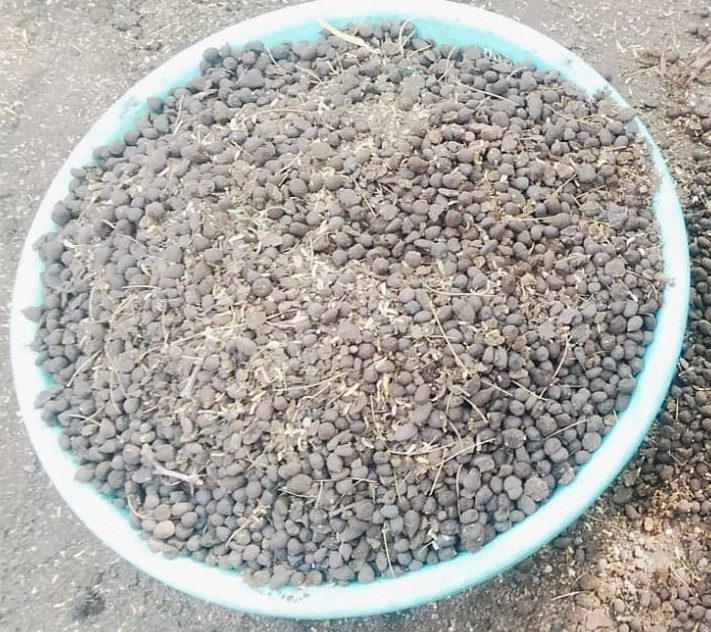
- Dung: the average quantity of dung each day.
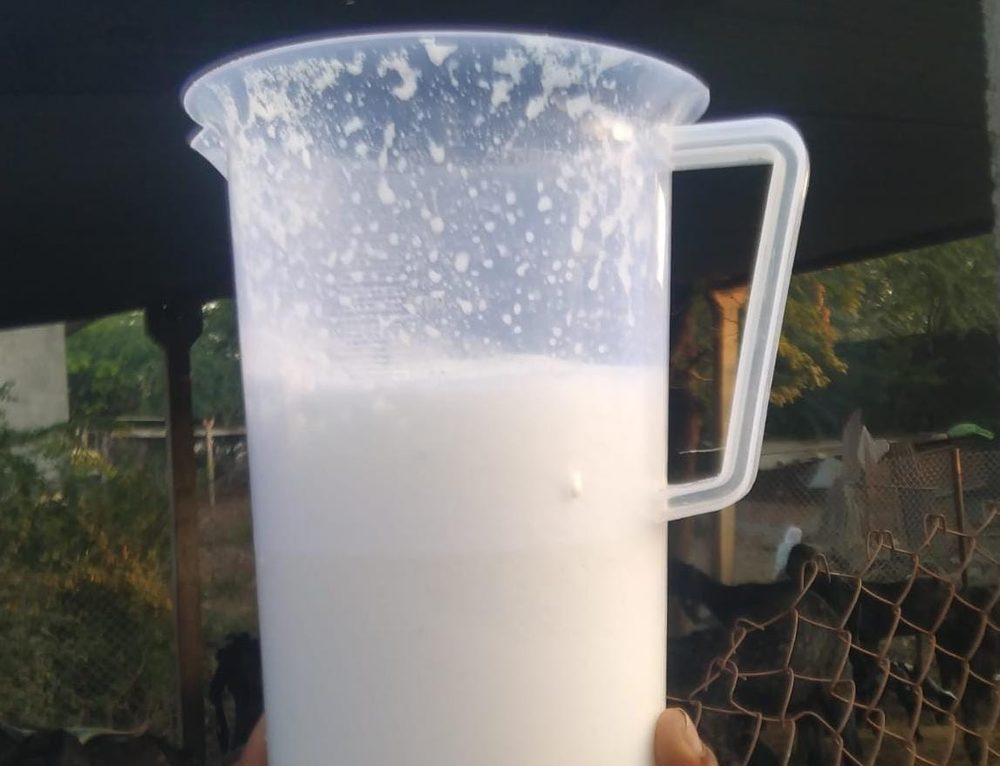
- Milk: the quantity and quality for each goat, morning and evening, recorded separately.
Information to record for each goat
- Goat ID (identification number)
- Age in years and months
- Body size: length, height and weight
- Body condition: good, average or weak
- Health status: whether healthy, and symptoms of any illness
- Physical features: skin colour, ear shape, face shape and horn shape
- Cleanliness: eyes, udder, hooves, nasal discharge and hindquarters
- Vaccinations: PPR, ET, HS, FMD and pox
- Whether deworming has been done
- Breeding status: pregnant, empty or in heat
Beneficiary enrolment checklist
Keep these details and documents ready when you are registered as a beneficiary.
Personal details
- Full name
- Address with a nearby landmark
- Aadhaar number
- PAN number
- Voter ID card
- Own phone number
- Alternate phone number with the person's name
- Education
- Caste validity certificate
- Number of family members
- Father's full name
- Mother's full name
- Husband's name
- Five passport size photographs
House, land and utilities
- House record (8A)
- Land record (7/12)
- Aadhaar card and NOC of the owner, if the house or land is in another person's name
- Lease agreement
- Electricity bill
- Gas card
Bank, loan and membership
- Bank name and account number
- Type of loan, if any, and in whose name
- Whether any loan is overdue
- Whether the loan is repaid regularly, and the balance
- Name of the producer company
- Whether you are a member, and the membership number
- Whether you will become a new member